
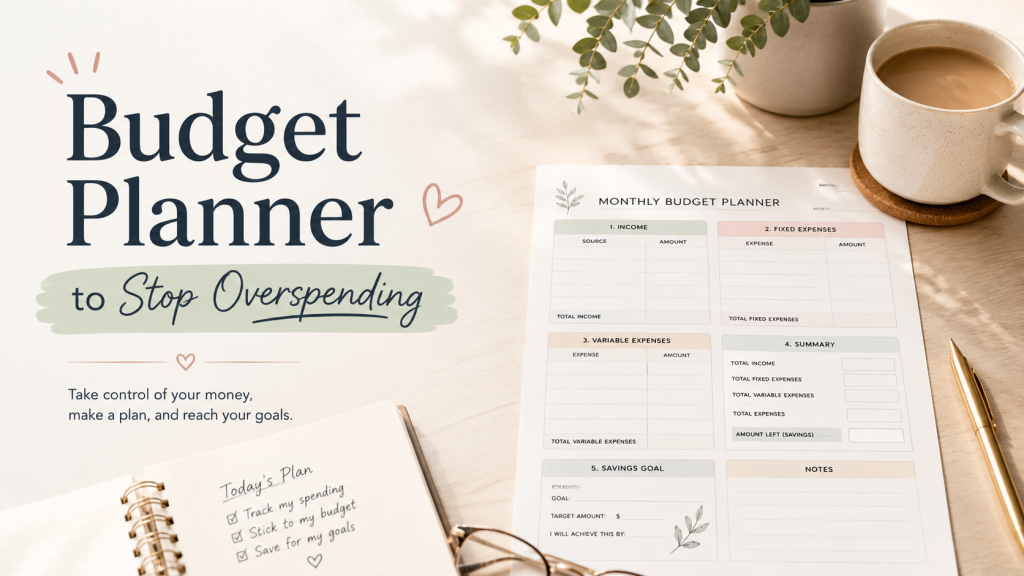
A budget planner to stop overspending can help you understand where your money is going and make better spending decisions each month.
Overspending often happens when money feels unclear. You may know how much you earn, but if you do not track your expenses, small purchases can quickly add up. A printable budget planner gives you a simple place to write everything down and see your spending more clearly.
Why Overspending Happens
Overspending does not always mean buying expensive things. Many times, it comes from small everyday purchases that are easy to forget.
Common reasons people overspend include:
- Not tracking daily expenses
- Forgetting about subscriptions
- Spending without a monthly plan
- Using cards without checking balances
- Not setting limits for flexible categories
- Trying to budget with a system that feels too complicated
A budget planner helps make these habits easier to notice.
How a Budget Planner Helps You Stop Overspending
A budget planner helps you create a plan before the month begins.
Instead of waiting until the end of the month to see what happened, you can decide how much money should go toward bills, groceries, savings, debt, and personal spending.
When you write your plan down, it becomes easier to compare your actual spending with your budget.
This can help you catch problems early and adjust before you run out of money.
What to Track in Your Budget Planner
To reduce overspending, start with the most important numbers.
You can track:
- Monthly income
- Fixed expenses
- Variable expenses
- Savings goals
- Debt payments
- Subscriptions
- Extra spending
- Weekly spending totals
A spending tracker is especially helpful because it shows where your money is actually going.
Simple Steps to Stop Overspending
Start by choosing one month to track carefully.
First, write down your income. Then list your bills and fixed expenses. After that, set realistic limits for flexible categories like food, shopping, entertainment, and personal spending.
During the month, update your planner once or twice a week.
At the end of the month, review your spending and ask:
- Which category was too high?
- Which purchases were unnecessary?
- Which spending limit needs to change?
- What can I improve next month?
The goal is not perfection. The goal is awareness and progress.
Keep Your Budget Realistic
A budget that is too strict is hard to follow.
If you cut every fun expense, you may quit after one week. A better approach is to create realistic spending limits and leave some room for normal life.
A simple budget planner works best when it helps you feel more in control, not punished.
Download a Free Budget Planner PDF
You can use free printable budget planner templates to track your spending, organize your expenses, and build better money habits.
FAQ
Can a budget planner really help stop overspending?
Yes. A budget planner helps you see your income, expenses, and spending habits more clearly. This makes it easier to notice where your money is going.
What is the best way to track overspending?
The best way is to use a simple spending tracker and update it every few days. This helps you catch spending problems before the month ends.
Why do I keep overspending even with a budget?
Your budget may be too strict, unclear, or not updated often enough. A realistic budget is easier to follow than a perfect one.
How often should I check my budget planner?
Check your budget planner at least once a week. If overspending is a big problem, update it two or three times per week.
If you want a simple budgeting system for beginners, start here: