
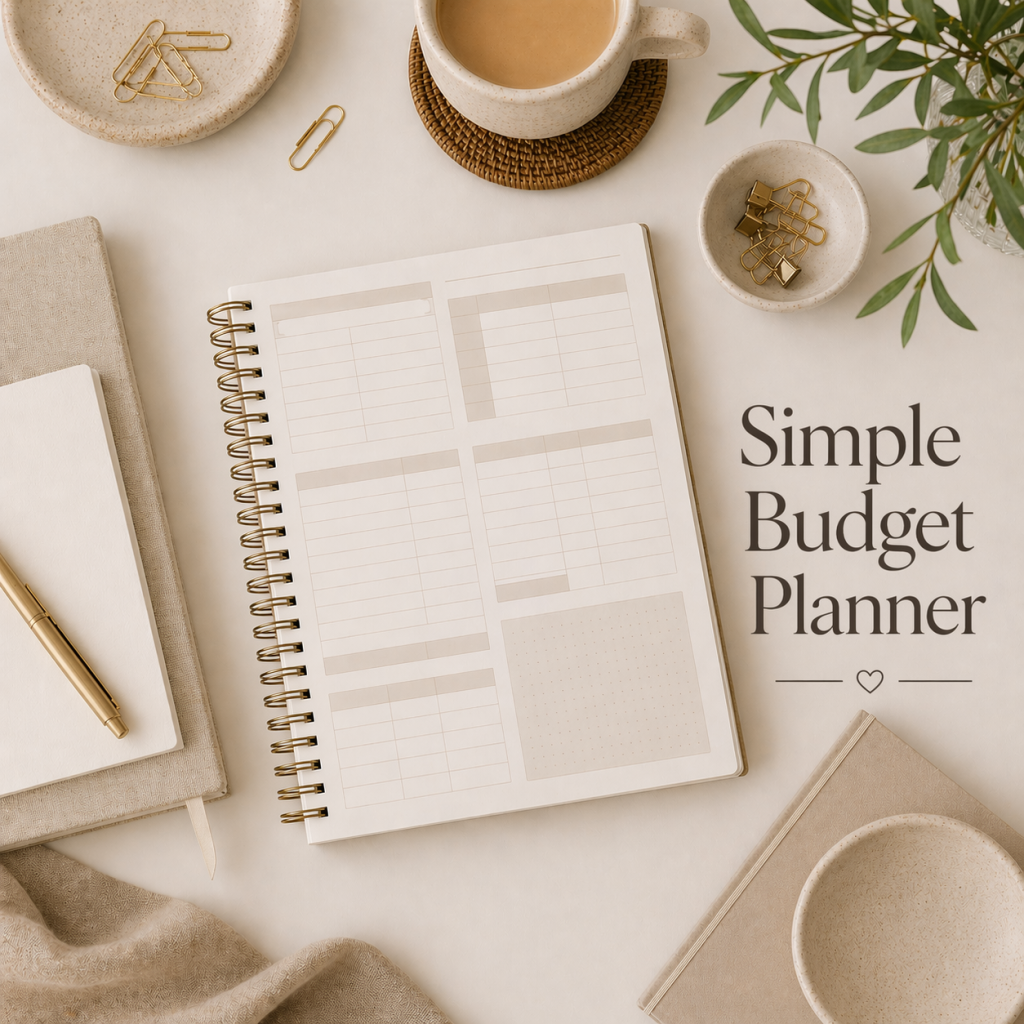
Simple Budget Planner

simple budget planner printable with monthly income, expenses, savings and money remaining

Simple Budget Planner for Beginners

A simple budget planner helps you organize your income, bills, everyday spending, savings, and remaining balance without using a complicated budgeting system.

Budgeting can feel difficult when you try to track too many categories or follow rules that do not match your real finances. A beginner-friendly budget should make your money easier to understand, not create more stress.

The free printable on this page gives you one clear place to record what comes in, what must go out, and how much money remains after your planned expenses.

If money is especially tight, use the Low Income Budget Planner to prioritize essential bills and plan each paycheck more carefully.

What Is a Simple Budget Planner?

A simple budget planner is a printable tool that helps you create a basic plan for your money.

It usually includes:

  • Monthly income
  • Fixed bills
  • Groceries
  • Transportation
  • Household expenses
  • Personal spending
  • Savings
  • Debt payments
  • Planned expenses
  • Actual expenses
  • Money remaining

The purpose is not to track every possible financial detail. The purpose is to make your most important numbers visible.

Who Is This Budget Planner For?

This planner is useful if you:

  • Are creating a budget for the first time
  • Feel overwhelmed by complicated spreadsheets
  • Want to understand where your money goes
  • Frequently spend more than planned
  • Need a printable monthly money overview
  • Want to begin saving consistently
  • Need a basic system before trying a detailed budgeting method

You do not need advanced financial knowledge. Start with the income and expenses you already have.

A Realistic Simple Budget Example

Imagine that your monthly take-home income is $3,200.

Your planned expenses are:

  • Rent: $1,150
  • Utilities: $240
  • Phone and internet: $135
  • Groceries: $480
  • Transportation: $260
  • Insurance: $180
  • Minimum debt payments: $175
  • Household expenses: $120
  • Personal spending: $160
  • Savings: $150
  • Monthly buffer: $100

Total planned expenses:

$3,150

Money remaining:

$3,200 − $3,150 = $50

The remaining $50 should not automatically become extra spending money. It can stay in the account as an additional cushion or be added to savings at the end of the month.

This budget is simple because each major category has one clear amount. It does not require dozens of small categories or complicated percentages.

How to Use the Simple Budget Planner

Step 1: Write Down Your Take-Home Income

Record the amount that actually reaches your bank account after taxes and deductions.

Include regular income such as:

  • Salary
  • Wages
  • Freelance income
  • Benefits
  • Child support
  • Pension income
  • Reliable side income

If your income changes, use a conservative estimate.

Do not build essential expenses around overtime, bonuses, or extra income that is not guaranteed.

Step 2: List Your Fixed Bills

Fixed bills are expenses that are usually due every month.

These may include:

  • Rent or mortgage
  • Utilities
  • Phone and internet
  • Insurance
  • Loan payments
  • Credit card minimums
  • Subscriptions
  • Childcare
  • School fees

Use recent statements so the amounts are realistic.

Step 3: Estimate Everyday Expenses

Next, plan expenses that may change from month to month.

Common categories include:

  • Groceries
  • Transportation
  • Household supplies
  • Medication
  • Clothing
  • Personal care
  • Eating out
  • Entertainment

Look at recent receipts or bank transactions instead of guessing.

Step 4: Add Savings and Debt Payments

Include a realistic savings amount before optional spending begins.

You could start with:

  • $10 per week
  • $25 from each paycheck
  • $50 per month
  • A small percentage of income

If you are paying down debt, include the minimum required payments first. Add extra payments only if the rest of the budget is secure.

Step 5: Include a Monthly Buffer

A buffer is a small amount left unassigned for unexpected changes.

For example, groceries may cost $15 more than expected or a small household expense may appear.

Even a buffer of $25, $50, or $100 can protect your plan.

Step 6: Calculate Money Remaining

Use this formula:

Income − total planned expenses = money remaining

If the result is positive, decide whether the money should remain as a buffer, go into savings, or pay down debt.

If the result is negative, review flexible categories before spending begins.

Step 7: Track What You Actually Spend

A budget is a plan, but actual spending shows what really happened.

Record the actual amounts for your main categories during the month.

Compare:

  • Planned groceries versus actual groceries
  • Planned transportation versus actual transportation
  • Planned personal spending versus actual personal spending
  • Planned savings versus actual savings

This comparison helps you create a better budget next month.

How to Keep a Budget Simple

Use only the categories that matter to your household.

You do not need separate categories for every small purchase. For example, shampoo, cleaning supplies, and paper products can all fit under household expenses.

A basic budget could use only:

  1. Income
  2. Housing and bills
  3. Groceries
  4. Transportation
  5. Household expenses
  6. Personal spending
  7. Savings
  8. Debt
  9. Buffer

You can add more detail later if it becomes useful.

How to Use a Weekly Plan With Your Monthly Budget

A monthly budget shows the complete picture, but a weekly plan can help control everyday spending.

For example, if you have $600 available for groceries, transportation, and personal spending during a four-week month, your approximate weekly limit is:

$600 ÷ 4 = $150 per week

Use the Weekly Budget Planner Printable to divide monthly spending into smaller seven-day limits.

This can help prevent overspending during the first half of the month.

How to Budget Around Each Paycheck

A monthly budget may show that your income is enough, but bill timing can still create problems.

You may have several bills due before the second paycheck arrives.

Use the Paycheck Budget Planner Printable to assign bills, groceries, transportation, and savings directly to each payday.

This helps protect money needed before the next deposit.

Common Beginner Budgeting Mistakes

Making the Budget Too Complicated

Too many categories can make the planner difficult to maintain.

Start with broad categories and add detail only when it helps you make a decision.

Using Unrealistic Amounts

A grocery amount that is much lower than your real spending will not create a successful budget.

Use recent expenses and reduce spending gradually.

Forgetting Irregular Expenses

Car repairs, gifts, school costs, annual subscriptions, and medical bills may not appear every month.

Prepare for predictable future costs with small sinking funds.

Treating the Bank Balance as Available Money

Part of your account balance may already be needed for future bills.

Check your budget before deciding how much is safe to spend.

Giving Up After One Difficult Month

A budget is adjusted over time.

If one category is repeatedly over budget, change the planned amount or identify a realistic way to reduce the expense.

Download the Free Simple Budget Planner

Use this printable to:

  • Record monthly income
  • Organize fixed and flexible expenses
  • Plan savings and debt payments
  • Compare planned and actual spending
  • Calculate the remaining balance
  • Review what needs to change next month

Complete the first page before the month begins. Update actual expenses during the month and finish the review after the month ends.

You can also explore more free budget templates and printable money trackers for weekly, paycheck, low-income, savings, debt, and expense-tracking needs.

Frequently Asked Questions

What is the easiest way to start budgeting?

Write down your take-home income, fixed bills, essential expenses, savings, and money remaining. Begin with a small number of categories.

Is a printable budget planner good for beginners?

Yes. A printable planner creates a clear overview without requiring an app, complicated spreadsheet, or advanced budgeting method.

How many budget categories should I use?

Start with approximately six to ten main categories. Add more only when the extra detail helps you control spending.

How often should I update my budget?

Create the plan before the month begins. Update actual expenses at least once per week and complete a review at the end of the month.

What should I do if my expenses are higher than my income?

Prioritize essential bills, reduce flexible spending, identify the exact shortage, and avoid entering unrealistic amounts simply to make the budget appear balanced.

Przewijanie do góry