
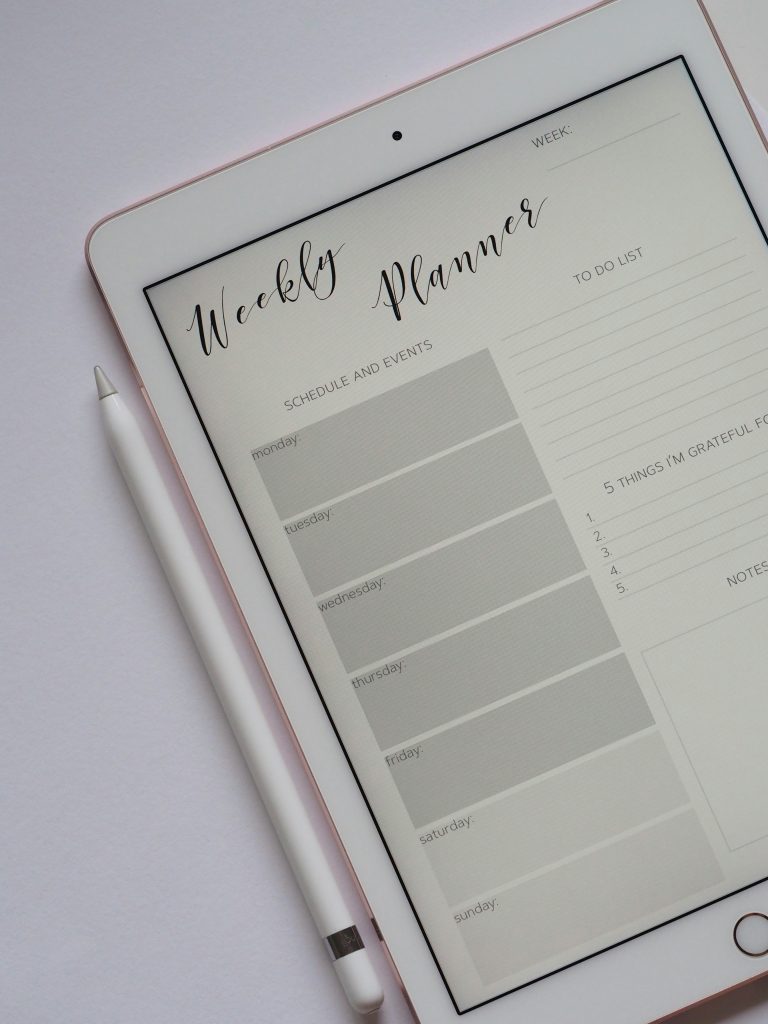
Weekly Budget Planner Printable for Better Spending Control
A weekly budget planner printable can help you control everyday spending before small purchases turn into a monthly budget problem.
Monthly budgets are useful for seeing the full picture, but a full month can feel too long when you are trying to manage groceries, transportation, personal spending, and bills with limited money.
A weekly plan gives you a shorter and more practical spending window. You only need to decide what your money must cover during the next seven days.
Use the free weekly budget planner printable on this page to record your available money, planned expenses, actual spending, and remaining balance.
If you need to organize your complete monthly finances first, start with the Simple Budget Planner.
What Is a Weekly Budget Planner?
A weekly budget planner is a printable budgeting tool that helps you organize income and expenses for one week.
Instead of planning every expense for an entire month, you focus on the next seven days.
You can use it to plan:
- Bills due this week
- Groceries
- Transportation
- Household expenses
- Personal spending
- Children’s expenses
- Savings
- Debt payments
- Unexpected costs
A weekly budget is especially useful when your spending changes from week to week or when you often run low on money before the end of the month.
Why Weekly Budgeting Can Be Easier
A monthly budget may look manageable at the beginning of the month, but it can be difficult to know how much you can safely spend each week.
For example, you may have $600 available for groceries, transportation, and flexible spending after paying your main bills.
Seeing $600 in your account can make it feel like you have plenty of money.
But divided across four weeks, the real weekly limit is approximately:
$600 ÷ 4 = $150 per week
A weekly budget makes this limit visible.
It helps you avoid spending too much during the first half of the month and struggling before your next paycheck.
A Realistic Weekly Budget Example
Imagine that you have $245 available for the week after your main monthly bills have been paid.
Your planned weekly expenses are:
- Groceries: $95
- Gas or transportation: $45
- Household supplies: $25
- Children’s expenses: $20
- Personal spending: $20
- Savings: $15
- Weekly buffer: $25
Total planned: $245
During the week, your actual expenses are:
- Groceries: $102
- Transportation: $40
- Household supplies: $18
- Children’s expenses: $20
- Personal spending: $16
- Savings: $15
Total spent or saved: $211
Money remaining:
$245 − $211 = $34
The grocery category was $7 over budget, but lower spending in other categories protected the weekly plan.
The remaining $34 could stay in the account as a buffer, be added to savings, or help pay for expenses during the following week.
How to Use the Weekly Budget Planner
Step 1: Write Down the Money Available
Record the amount you can safely use during the week.
Do not include money already reserved for rent, utilities, insurance, debt payments, or future bills.
For example, if your account contains $900 but $700 is needed for upcoming bills, your weekly available amount is not $900.
Only use the money that is genuinely available.
Step 2: Add Bills Due This Week
List every bill that must be paid before the end of the seven-day period.
This could include:
- Phone bills
- Subscriptions
- Credit card payments
- School fees
- Insurance
- Medical expenses
- Installments
Subtract these bills before planning flexible spending.
Step 3: Plan Essential Weekly Expenses
Estimate how much you need for groceries, transportation, medication, household supplies, and other essentials.
Use recent receipts or bank transactions when possible.
A realistic estimate is more useful than an ideal amount that you cannot maintain.
Step 4: Set Limits for Flexible Spending
Flexible spending may include eating out, entertainment, shopping, snacks, and personal purchases.
Set a limit before the week begins.
When the category reaches zero, pause additional spending unless you deliberately move money from another category.
Step 5: Add a Small Weekly Buffer
Leave a small amount unassigned for unexpected costs.
Even a $10 or $20 weekly buffer can help when groceries cost more than expected or a small expense appears.
Step 6: Record Actual Spending
Update the planner whenever you spend money or review your expenses at the end of each day.
Record the actual amount next to the planned amount.
This allows you to see problems before the week is over.
Step 7: Review the Week
At the end of the week, calculate the amount remaining.
Ask yourself:
- Which category was over budget?
- Which category cost less than expected?
- Did I forget any expenses?
- Did I use my weekly buffer?
- What should I change next week?
Weekly reviews help you improve the next plan without waiting until the end of the month.
How to Divide a Monthly Budget Into Weeks
Start with the money remaining after fixed monthly bills.
Suppose your monthly take-home income is $3,000.
Your fixed expenses are:
- Housing: $1,200
- Utilities: $250
- Insurance: $180
- Minimum debt payments: $170
- Phone and internet: $150
Total fixed expenses: $1,950
Money remaining:
$3,000 − $1,950 = $1,050
If you divide this amount across four weeks:
$1,050 ÷ 4 = $262.50 per week
You could round the weekly amount down to $250 and leave $50 as a monthly buffer.
This gives you a clear spending limit without using every available dollar.
Weekly Budgeting When You Are Paid Biweekly
If you are paid every two weeks, divide each paycheck into two weekly spending plans.
For example, a $1,400 paycheck may need to cover:
- Bills before the next payday: $850
- Two weeks of groceries and transportation: $400
- Savings: $50
- Buffer: $100
After reserving the bills, divide the $400 of everyday spending into:
- Week 1: $200
- Week 2: $200
This prevents the first week from using money needed during the second week.
You can also use the Paycheck Budget Planner Printable to assign bills and spending categories directly to each paycheck.
Weekly Budgeting When Money Is Tight
When you have limited money available, prioritize:
- Essential bills due this week
- Groceries
- Transportation needed for work
- Medication and necessary healthcare
- Minimum debt payments
- Other expenses
- Optional spending
Do not create unrealistically low amounts just to make the planner balance.
If your essential expenses are higher than the money available, the weekly planner will show the exact shortage. That information is more useful than a budget that only works on paper.
For a complete plan focused on essential expenses and limited income, use the Low Income Budget Planner.
Common Weekly Budgeting Mistakes
Treating the Bank Balance as Spending Money
Some of the money in your account may already be needed for future bills.
Only include money that is genuinely available for the week.
Forgetting Small Purchases
Snacks, delivery fees, convenience-store purchases, and online subscriptions can quickly reduce the weekly balance.
Record small expenses as well as large ones.
Spending the Entire Weekly Amount Early
A weekly limit should last seven days.
Consider dividing flexible spending into a daily limit if you regularly spend too much at the beginning of the week.
Making Every Week Identical
Some weeks include more bills, school costs, travel, or family expenses.
Create a new plan for every week instead of copying the same numbers automatically.
Download the Free Weekly Budget Planner Printable
Use this four-page printable to plan the next seven days, track daily expenses, organize weekly bills, and review your spending.
The printable planner helps you:
- Record your weekly starting amount
- List bills due during the week
- Plan spending categories
- Compare planned and actual expenses
- Track daily purchases
- Calculate your remaining balance
- Prepare for the following week
Print one copy before each week begins. Complete the plan before spending from the weekly amount, then update it as expenses occur.
Explore more free budget templates and printable money trackers for different budgeting needs.
Frequently Asked Questions
Is a weekly budget better than a monthly budget?
Neither method is always better. A monthly budget shows your complete financial picture, while a weekly budget gives you closer control over everyday spending. Using both can be effective.
How much should I budget each week?
Subtract fixed bills and planned savings from your monthly income. Divide the remaining amount by the number of weeks it must cover.
When should my budget week begin?
Choose a day that fits your schedule. Many people begin on Monday, Sunday, or payday. Consistency matters more than the specific day.
Should I include bills in my weekly budget?
Yes. Include any bill due during that week, even if it is already part of your monthly plan.
What should I do with money left at the end of the week?
You can keep it as a buffer, add it to savings, pay extra toward debt, or carry it into the following week.
