
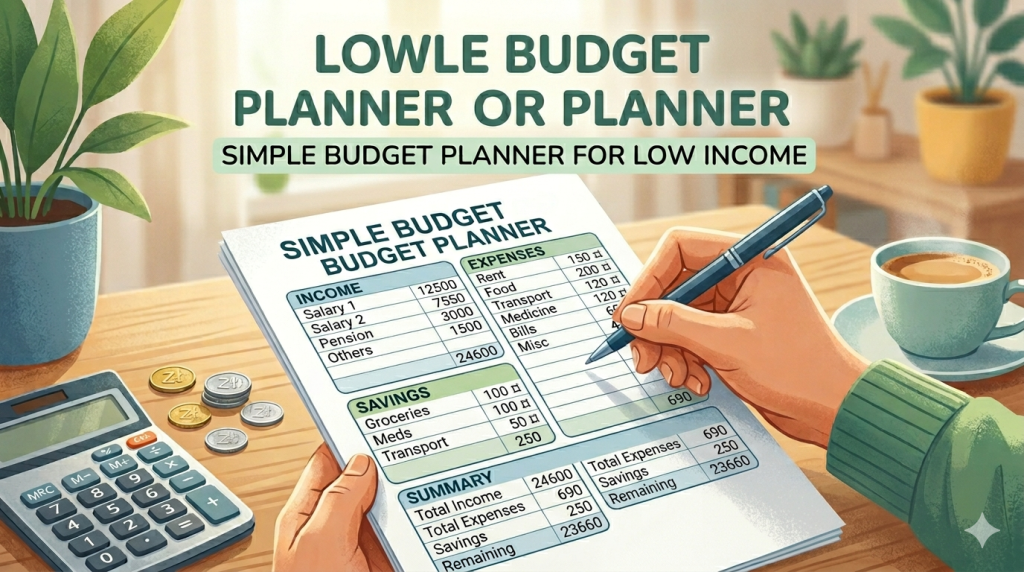
Budget Planner for Low Income

low income budget planner printable with paycheck dates, essential expenses and remaining balance

Low Income Budget Planner for When Money Is Tight

Managing money on a limited income can feel difficult because there is very little room for unexpected expenses or budgeting mistakes.

A low income budget planner helps you decide what must be paid first, how much you can spend between paydays, and whether there is any money left for savings or debt.

The goal is not to create a perfect budget or force every category into an unrealistic percentage. The goal is to build a practical plan around the income you actually receive.

You can use the free printable low income budget planner on this page to organize your income, essential bills, flexible expenses, savings, and remaining balance.

What Is a Low Income Budget Planner?

A low income budget planner is a budgeting tool designed for situations where most of your income is already needed for essential expenses.

If you need a basic overview before using the low income version, start with the Simple Budget Planner.

It helps you focus on the categories that matter most:

  • Income and paycheck dates
  • Housing
  • Utilities
  • Groceries
  • Transportation
  • Insurance
  • Minimum debt payments
  • Essential family expenses
  • Small emergency savings
  • Money remaining before the next payday

A regular budget may include many optional categories. A low income budget should begin with the expenses that keep your household safe and functioning.

What Should You Pay First When Money Is Tight?

When your income cannot comfortably cover everything, start by organizing expenses according to their importance.

A practical order is:

  1. Housing
  2. Essential utilities
  3. Food
  4. Transportation needed for work
  5. Medication and necessary healthcare
  6. Insurance
  7. Minimum debt payments
  8. Other expenses
  9. Optional spending

Your exact order may be different. For example, someone who works from home may have lower transportation costs but may depend heavily on reliable internet access.

The planner should reflect your real household, not somebody else’s ideal budget.

A Realistic Low Income Budget Example

Imagine a household with monthly take-home income of $2,350.

The essential expenses are:

  • Rent: $950
  • Electricity and water: $180
  • Phone and internet: $110
  • Groceries: $420
  • Transportation: $220
  • Insurance: $130
  • Minimum debt payments: $125
  • Medication: $60

Total essential expenses:

$2,195

That leaves:

$2,350 − $2,195 = $155

The remaining $155 could be divided like this:

  • Emergency savings: $40
  • Household or personal spending: $45
  • Extra groceries or transportation buffer: $50
  • Unassigned cushion: $20

This is not a perfect budget, and it does not follow the traditional 50/30/20 rule. Housing and other needs take most of the income.

However, it is still a useful budget because every dollar has a realistic purpose and the household has a small cushion for changes during the month.

How to Use the Low Income Budget Planner

Step 1: Write Down Your Real Income

Record the amount that actually reaches your bank account after taxes and deductions.

If your income changes, use the lowest amount you reasonably expect to receive. Do not build your essential budget around overtime, bonuses, tips, or extra shifts that are not guaranteed.

Step 2: Add Your Paycheck Dates

Write down when each paycheck arrives.

This is important because having enough income for the month does not always mean you have enough money on the day a bill is due.

Paycheck dates help you match bills with the income that will pay them.

Step 3: List Essential Bills

Add housing, utilities, groceries, transportation, insurance, medication, and minimum debt payments.

Use real amounts from recent statements whenever possible.

For expenses that change, such as electricity or groceries, use a realistic estimate rather than the lowest amount you hope to spend.

Step 4: Plan Flexible Spending

Flexible expenses may include:

  • Clothing
  • Household supplies
  • Eating out
  • Entertainment
  • Personal care
  • Non-essential subscriptions
  • Extra shopping

When money is tight, set a clear limit for these categories before spending begins.

For closer control over groceries and everyday spending, break your monthly plan into smaller steps with the Weekly Budget Planner Printable.

Step 5: Add a Small Buffer

Do not assign every remaining dollar to optional spending.

Even a buffer of $10, $20, or $50 can protect your plan when groceries cost more than expected or a small expense appears.

Step 6: Review the Remaining Balance

Subtract all planned expenses from your income.

If the result is positive, decide whether the remaining money should go toward:

  • Emergency savings
  • Upcoming bills
  • Debt
  • A sinking fund
  • Next month’s expenses

If the result is negative, return to your flexible categories first. If essentials alone exceed your income, the planner will at least show the exact size of the shortage so you can make more informed decisions.

Try Budgeting by Paycheck

A monthly budget shows your complete financial picture, but budgeting by paycheck may be easier when money frequently becomes tight before payday.

Step 4: Plan Flexible Spending

For each paycheck, list:

  • Paycheck amount
  • Bills due before the next paycheck
  • Grocery allowance
  • Transportation costs
  • Minimum debt payments
  • Small savings amount
  • Remaining spending money

For example, if you receive $1,175 twice per month, do not treat the full $2,350 as immediately available.

Plan the first $1,175 for the expenses due during the first part of the month and the second paycheck for expenses due later.

This prevents money needed for a future bill from being spent too early.

How to Save Money on a Low Income

Saving does not need to begin with a large amount.

A realistic starting target could be:

  • $5 per week
  • $10 from each paycheck
  • $25 per month
  • Part of any unexpected extra income

The first goal is to build a small buffer, not immediately save several months of expenses.

Once you have a starter cushion, you can gradually work toward a larger emergency fund.

What to Do When the Budget Does Not Balance

Sometimes the problem is not unnecessary spending. The income may simply be too low to cover all essential expenses.

Do not hide this by entering unrealistic numbers.

Use the planner to identify:

  • The exact monthly shortage
  • Which bills are due first
  • Which expenses can be delayed or reduced
  • Which providers may offer payment plans
  • Which subscriptions or services can be canceled
  • Whether bill due dates can be changed
  • Whether additional income is needed

A truthful budget is more useful than a perfect-looking budget that cannot work in real life.

Common Low Income Budgeting Mistakes

Using Your Best Month as Normal Income

If income changes, budget around a conservative amount. Treat additional income as a bonus for savings, upcoming bills, or debt.

Forgetting Irregular Expenses

Car repairs, school expenses, annual fees, gifts, and medical costs may not happen every month, but they still affect your budget.

Create small sinking funds for predictable future expenses.

Setting Unrealistic Spending Limits

A grocery budget that is too low will not solve a money problem. Use real spending data and make gradual changes.

Ignoring Small Purchases

Small purchases can use the limited amount left after essential bills. Track them so you can decide whether they are worth keeping.

Download the Free Low Income Budget Planner

The printable planner is designed to help you:

  • Record income and paycheck dates
  • Prioritize essential expenses
  • Plan flexible spending
  • Track the remaining balance
  • Create a small savings goal
  • Prepare for the next payday

Download the PDF, print one copy for each month, and complete it before spending from your first paycheck.

You can also explore the complete collection of free budget templates and printable trackers.

Frequently Asked Questions

Can I create a budget if my income is very low?

Yes. A budget cannot create additional income, but it can show what must be paid first, where your money is going, and whether you have a shortage that needs to be addressed.

Should I use a monthly or paycheck budget?

Use a monthly budget for the full picture and a paycheck budget to manage the timing of bills between paydays. Many people benefit from using both.

Does a low income budget need to follow the 50/30/20 rule?

No. When income is limited, essential expenses may take much more than 50% of your income. Use percentages as a reference, not as a rule that makes your real budget impossible.

How much should I save on a low income?

Begin with an amount you can repeat consistently, even if it is only $5 or $10. A small buffer is more useful than an ambitious savings target you cannot maintain.

What if my essential expenses are higher than my income?

Write down the real numbers. Identify the shortage, prioritize urgent bills, contact service providers when necessary, reduce flexible expenses, and consider available ways to increase income or receive support.

Przewijanie do góry